OKC Medical Helicopter Crash The Second In Two Months
The crash Friday morning is the second crash of a medical helicopter in Oklahoma in just the past two months. Nationwide, Friday's crash marks the second fatal incident for the EagleMed company, also in the past two months.Friday, February 22nd 2013, 7:36 pm

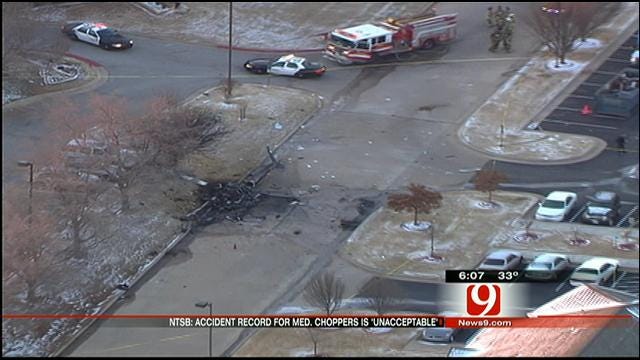
The crash Friday morning is the second crash of a medical helicopter in Oklahoma in just the past two months. Nationwide, Friday's crash marks the second fatal incident for the EagleMed company, also in the past two months.
That doesn't just seem high, it is. In a 2011 report, an NTSB board member called the current accident record for medical helicopters "unacceptable".
In July of 2010, an EagleMed helicopter went down near Kingfisher, killing the pilot and nurse. Michael Eccard was the only survivor.
"First thing I did was look around and check my crew and of course they were dead," he recalled in a July 2011 interview.
In January of this year, another medical helicopter, this one Mediflight, crashed in a field near Cromwell in Seminole County. All four crew members survived. But now just a month later, another fatal crash, and again it was EagleMed.
The 2011 NTSB report points to Helicopter EMS crew as the highest-risk occupation.
"2013 is starting off very bad for the HEMS (Helicopter EMS) industry. As a matter of fact it is on par to be worse than 2008, which was the worst year on record," said Ladd Sanger.
7/22/2011 Related Story: 2010 Eagle Med Crash Near Kingfisher Still Under Investigation
Sanger is an attorney representing four of the victims from the Cromwell crash. He is also a licensed helicopter pilot. He says the crews sometimes put themselves in danger because they feel a pressing need to fly. That's in addition to the competitive nature of the business and equipment issues that all lead to the high number of accidents.
"I think the public needs stop realize anybody can be a victim on one of these helicopters because you don't know when you're going to have a medical event that will land you in the back of one of them."
Back in 2009 the NTSB made 10 recommendations to the FAA to improve safety for HEMS flight crews that include better training, use of night vision imaging, and requiring autopilots if a second pilot is not available.
According to the FAA, they proposed a new rule in 2010 that would address many of the issues the NTSB raised. That rule is still under final review.
10/9/2010 Related Story: FAA Proposes Changes Following Deadly Medical Chopper Crash in Oklahoma

Get The Daily Update!
Be among the first to get breaking news, weather, and general news updates from News on 6 delivered right to your inbox!
More Like This

February 22nd, 2013

April 15th, 2024

April 12th, 2024

March 14th, 2024
Top Headlines

April 25th, 2024

April 25th, 2024


April 25th, 2024